What Is an E-Stamp Certificate and How to Verify Its Authenticity?
An e-stamp certificate records stamp duty payment on a legal document. This blog explains how e-stamping works in India, who pays stamp duty, the difference between e-stamping and traditional stamp paper, and how to verify an e-stamp certificate's authenticity. It also outlines the registration and profile activation process on StockHolding's online e-stamping portal.
E-stamping replaces the need for physical stamp paper in places where the system applies. It also gives users a way to verify payment details through an authorised portal or verification service.
However, an e-stamp certificate does not confirm that a property has a clear title or that every detail in a sale agreement is legally valid. Buyers must check these aspects separately before completing a transaction.
What Is an E-Stamp Certificate?
An e-stamp certificate is an electronic certificate that records the payment of stamp duty on a legal instrument. The certificate contains details that help identify the transaction and verify the payment.State governments determine the applicable stamp duty rates and rules for most property-related documents. Authorised agencies and government portals process payments and issue or record the relevant certificates.
An e-stamp certificate may contain the following details:
- Certificate number or Unique Identification Number (UIN): A unique reference used to identify the certificate.
- State: The state under whose stamp duty system the certificate was issued.
- Stamp duty amount: The amount paid towards stamp duty.
- Document description: The type of document or transaction for which the duty was paid.
- Date of issue: The date on which the certificate was generated.
- Details of the parties: The names of the parties, where required by the applicable system.
- Other verification details: These may include a QR code, barcode, verification code or other reference information.
Why Is an E-Stamp Certificate Required?
Stamp duty is a tax on specified legal instruments. For most property transactions, the state government determines the applicable rate and payment procedure.An e-stamp certificate records the payment made against a document. It also gives authorities and other parties a way to verify the certificate details.
E-stamping serves several purposes:
- Proof of payment: It records the stamp duty paid for a specified document.
- Verification: Users can check the certificate details through the relevant authorised system.
Frequently Asked QuestionsFAQs
An e-stamp certificate records stamp duty payment and gives users a way to verify the transaction details. Its electronic format can reduce the risk of counterfeit stamp paper and simplify verification.
An e-stamp certificate can serve as proof of stamp duty payment when the issuing system and document comply with the applicable law. Its legal effect depends on the relevant state rules, the instrument and whether the required duty has been paid. An e-stamp certificate does not automatically validate every term of an agreement.
The person responsible for stamp duty pays the applicable amount. In a property purchase, the buyer usually bears this cost, subject to the agreement and applicable law. The payment goes to the government through an authorised channel.
No. The permitted payment method depends on the state, the document and the applicable rules. Some transactions use e-stamping, while others may use approved electronic receipts, franking or physical stamp paper. Buyers should confirm the permitted method with the relevant stamp and registration department.
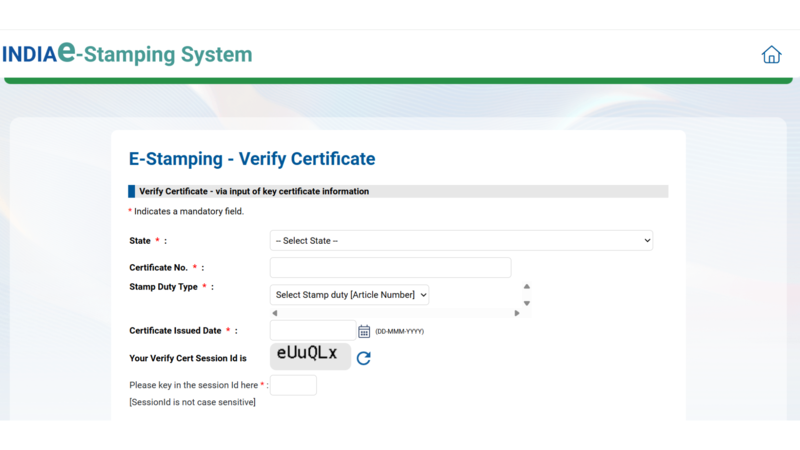
StockHolding provides an online certificate verification facility. Users can also check certificates through other authorised state or agency systems where available. Check the relevant portal for its current access requirements and any applicable fees.
An e-stamp certificate records stamp duty payment. A registered sale deed records the transfer of property ownership through the prescribed registration process. The certificate does not replace the sale deed or registration where the law requires registration.
No. It records stamp duty payment and supports verification of that payment. Buyers must separately examine the title documents, ownership records, encumbrances, approvals and other relevant property records.
Disclaimer: The information presented by TOI Homes, part of The Times of India Group, is for general informational purposes only and does not constitute financial, legal, or investment advice. All data and insights are based on sources believed to be reliable but are not guaranteed for accuracy or completeness and are subject to change due to market conditions. The developer and associated entities are not liable for decisions made based on this information. Real estate investments involve risks, and buyers are advised to conduct independent due diligence and consult certified advisors before investing. TOI Homes does not endorse or promote any specific property or developer unless explicitly stated.