
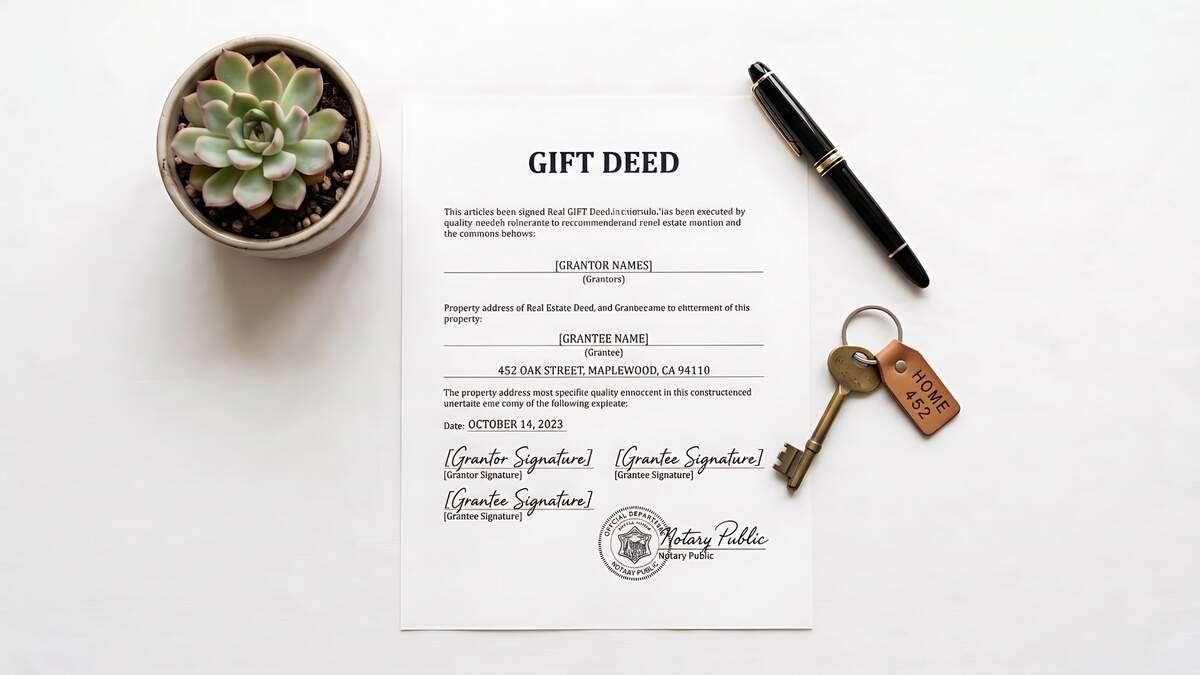
What is a Gift Deed? Definition, Purpose, and Registration Process
A gift deed allows you to transfer property without payment. Learn about its legal requirements, advantages, registration process, documents and tax implications in India.
A gift deed in India is basically the voluntary transfer of existing property without monetary consideration. For any immovable property, the law asks for a registered deed, acceptance by the recipient, and attestation by at least two witnesses. This is written in Section 123 of the Transfer of Property Act 1882.
What Is a Gift Deed?
A gift deed is a legal document used to transfer ownership of property from one person to another without payment. The person giving the property is called the donor, while the person receiving it is called the donee.Under Section 122 of the Transfer of Property Act, 1882, the gift must be voluntary and must involve existing movable or immovable property. The recipient must also accept the gift during the donor's lifetime and while the donor is capable of giving it.
For example, parents can gift residential property to adult childern using a registered gift deed. This transfer will happen during the parent’s lifetime. On the other hand, a Will only takes effect after death.
What Is the Purpose of a Gift Deed?
A gift deed provides a formal record of a property transfer without a sale. People commonly use it to:- Transfer property within a family: Parents may gift a house or land to their children.
- Transfer ownership during lifetime: Donors transfer property immediately without waiting for inheritance proceedings.
- Record recipient rights: A registered deed clearly documents the transfer and its terms.
- Reduce the scope for disputes: Clear property details and written acceptance can help prevent disagreements later.
What Are the Advantages and Disadvantages of a Gift Deed?
A gift deed can simplify property transfers, but it also has certain limitations.| Advantages | Disadvantages |
|---|---|
| Transfers ownership during the donor's lifetime. | The donor gives up ownership rights after a valid transfer. |
| Creates a formal legal record of the gift. | Stamp duty and registration charges apply. |
| May offer income-tax exemptions for eligible recipients. |
Frequently Asked QuestionsFAQs
As per the Section 56(2)(x) of the Income Tax Act, whether a gift deed is taxable or not depends on who is giving the gift, who is receiving it, and the value or nature of the property. It is tax-free when you receive movable or immovable property from a close relative, gifts on marriage, or by will or inheritance. Also, it is taxable when you receive a gift deed from a non-relative. If you receive land or a building without consideration (or for inadequate consideration) and the stamp duty value exceeds ₹50,000, then the entire stamp duty value (or difference) is taxable at your applicable tax rate. Moreover, if the aggregate value of cash, jewelry, shares, or other specified movable property from non-relatives exceed ₹50,000 in a financial year, then the entire amount is taxable. In addition to this, even if the income tax on a gift is ₹0, you still have to pay state-level stamp duty and registration fees to legally register the gift deed with the sub-registrar.
A gift deed remains valid indefinitely for a lifetime, once it is legally executed, accepted, and registered.
A donor cannot cancel a registered gift deed simply by changing their mind. Section 126 of the Transfer of Property Act allows revocation only under specific legal conditions, including certain agreed conditions or grounds for rescinding a contract.
Yes. Stamp duty and registration charges generally apply to gifts of immovable property. The amount depends on the state, property value, and relationship between the donor and donee. Some states offer concessions for gifts between eligible family members.
Yes. Once the gift is validly completed and registered, the donee becomes the owner and can generally sell, transfer, or otherwise deal with the property, subject to applicable legal restrictions.
A gift deed transfers ownership during the donor's lifetime after the required legal formalities and acceptance. A Will generally transfers property after the person's death. A gift deed for immovable property requires registration, while registration of a Will is generally optional.
Disclaimer: The information presented by TOI Homes, part of The Times of India Group, is for general informational purposes only and does not constitute financial, legal, or investment advice. All data and insights are based on sources believed to be reliable but are not guaranteed for accuracy or completeness and are subject to change due to market conditions. The developer and associated entities are not liable for decisions made based on this information. Real estate investments involve risks, and buyers are advised to conduct independent due diligence and consult certified advisors before investing. TOI Homes does not endorse or promote any specific property or developer unless explicitly stated.


