Why Green Spaces and Walkable Communities Are Important in Luxury Housing
Explore how green spaces and walkable communities are redefining luxury real estate. This guide examines the shift toward wellness-centric housing and the financial benefits of IGBC-certified homes.
India’s HNI and UHNI buyers know this feeling well. In 2026, they’re done compromising on it.
The Indian luxury real estate market is quietly but decisively shifting. From opulence to wellbeing, from grand lobbies to green corridors, from “how big” to “how does it feel to live here.” This blog helps you understand that shift, what’s driving it, and what it means when you’re choosing your next home.
The Changed Market
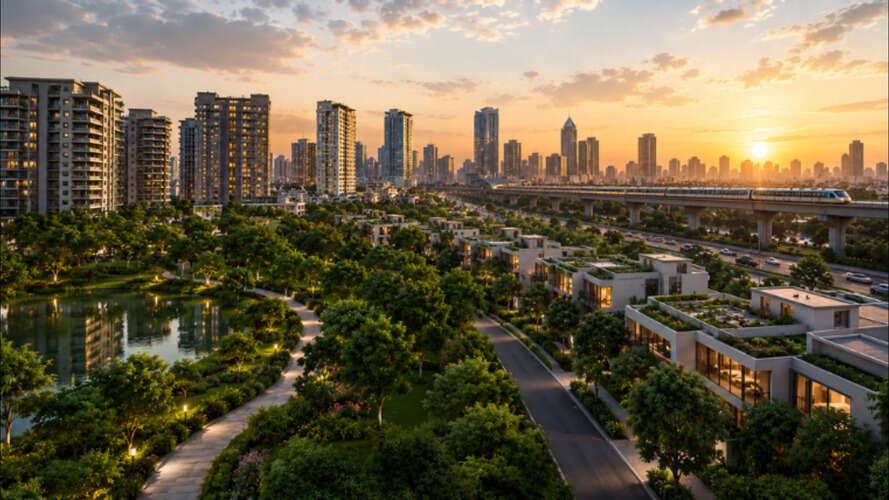
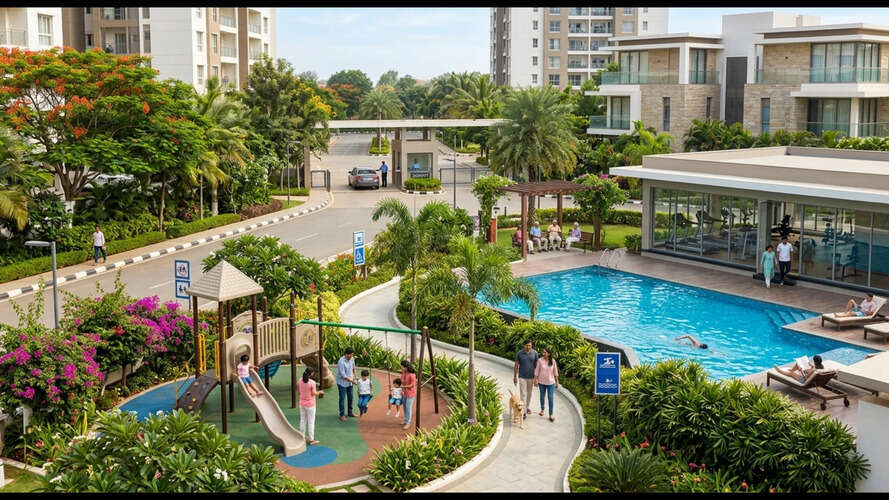
The definition of luxury real estate is evolving. For many premium homebuyers, luxury is no longer defined only by larger homes, grand entrances, private amenities or premium finishes. Increasingly, buyers are also looking for homes that support wellbeing, sustainability, access to nature and a more comfortable everyday lifestyle.This shift is reflected in growing interest in wellness-focused amenities, landscaped open spaces, biophilic design and environmentally responsible building practices across India's premium residential market.
For luxury homebuyers, the question is increasingly moving from “How much space am I getting?” to “How well will this space support the way I want to live?”
What Green Spaces Actually Do To You
The preference for greenery isn't just aesthetic. It's biological, and studies from Indian cities confirm it.- A 2025 study in Cities & Health surveyed 758 Delhi residents and found a direct link between access to green spaces and measurably better mental wellbeing.
- A separate Delhi study of 1,200+ adults found that people living closer to parks had significantly lower rates of clinical depression. (Research Gate)
- Mumbai's per capita green space stands at just 1.24 sq meters per resident against the WHO's recommended 9 sq meters. That gap has real, daily consequences for mental health and quality of life. (Clearcut, UN Habitat)
The Rise of Walkable Neighborhoods
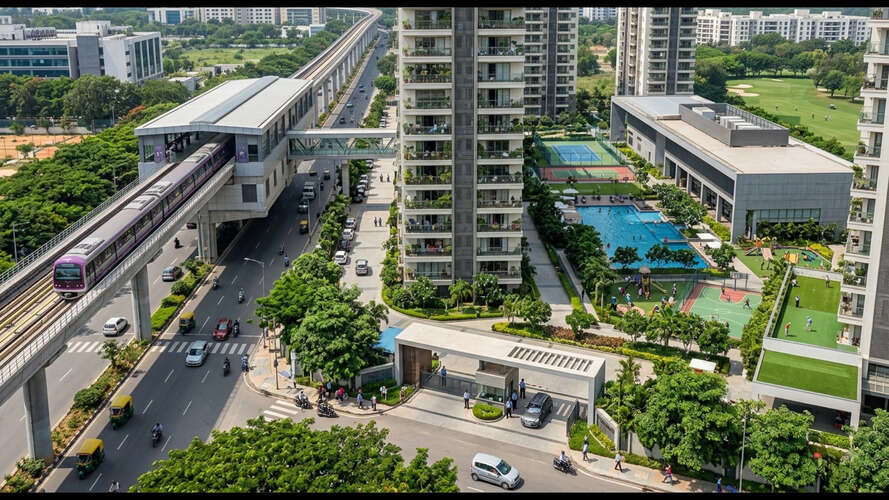
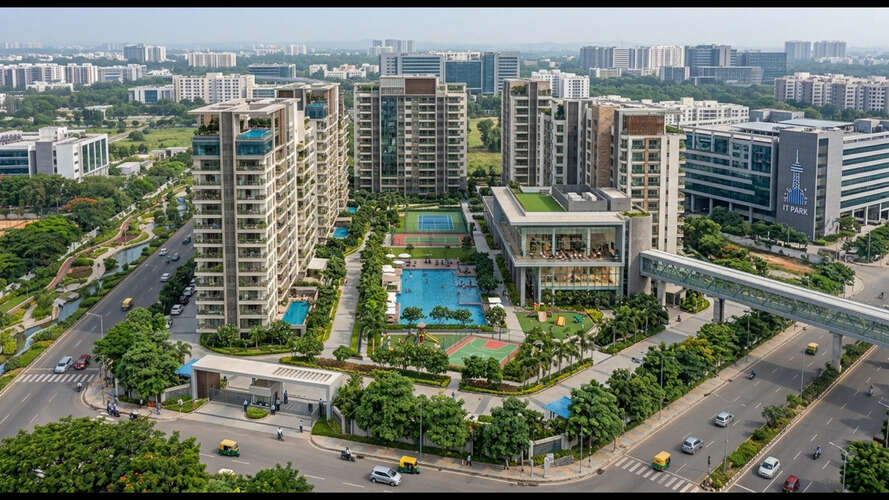
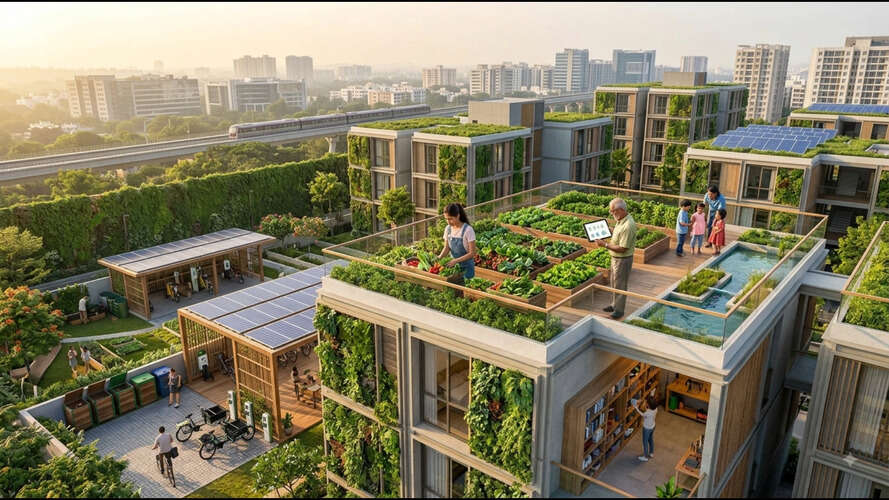
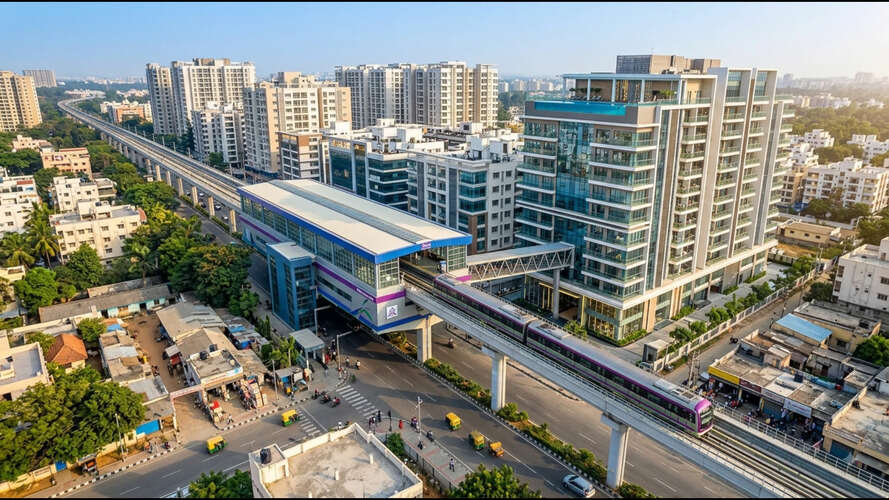
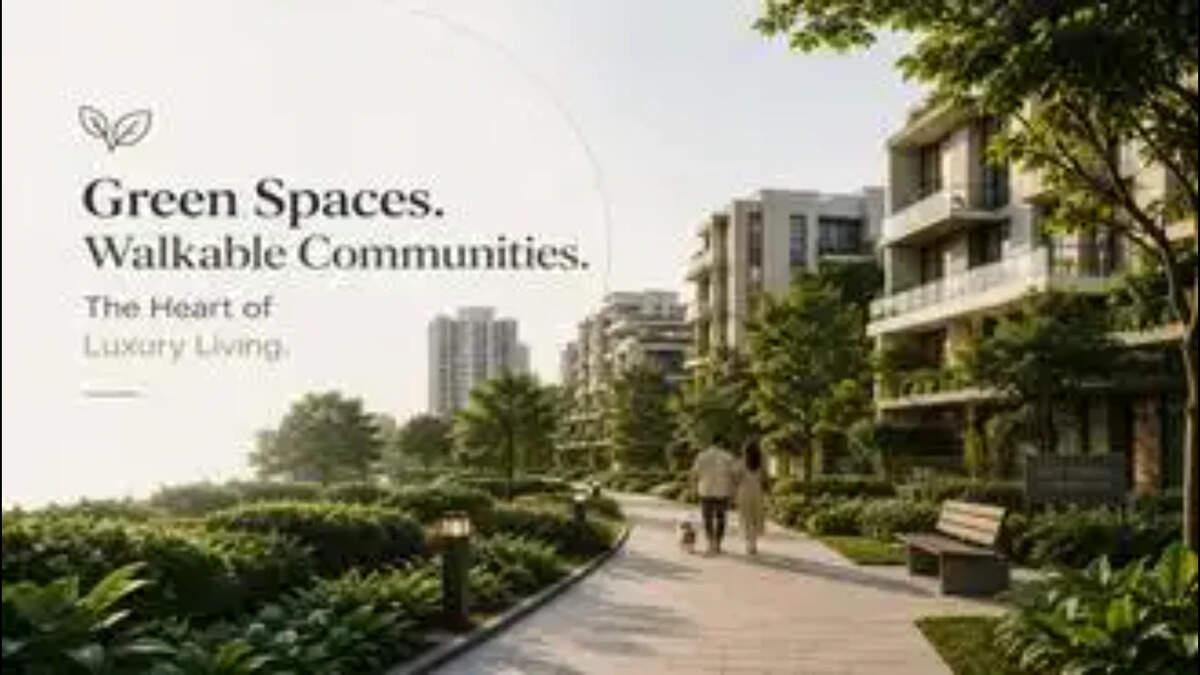
Walkability is becoming an increasingly important consideration in residential planning, particularly in communities designed around convenience and quality of life.One concept often associated with this shift is the . It refers to an urban-planning approach in which residents can access essential everyday needs and services within roughly 15 minutes, typically through convenient walking, cycling or public-transport connections.For residential communities, the underlying principle is simple: daily life should not require a car for every small task.In India, elements of walkable and mixed-use planning are increasingly visible in integrated townships and large-scale residential developments. For luxury buyers, this can mean easier access to landscaped areas, retail, recreational facilities and community spaces without constantly relying on road travel.A genuinely walkable residential environment can therefore improve convenience while making the community more connected and engaging.ID133204006biophilic-design-green-spacesTOI Homes Agency1920 X 1080The term sounds technical. However, it isn’t!Biophilic design is simply the decision to let nature into the building, structurally, functionally, and sensory. Think:JLL data shows 40%+ of new premium Indian projects incorporated biophilic features in 2024. ANAROCK notes that roof gardens, meditation zones, and natural ventilation are now among the most demanded features in the premium segment.Homes designed with a natural feel are better to live in. And homes that feel better to live in hold their value better, too.Take a look at the type of certification:India now has a 10+ billion sq ft IGBC-registered green building footprint, the . That scale means certifications are mainstream, verifiable, and market-tested.The buyer's bottom line on IGBC:A green certification today is both a values statement and a financial advantage.Luxury is increasingly being measured not only by the size or finish of a home, but also by the quality of the environment around it.Green, walkable communities can create more opportunities for residents to spend time outdoors, interact with neighbours and access recreational spaces as part of their everyday routine.For buyers who value wellness and community living, features such as tree-lined pathways, walking trails, landscaped courtyards, community gardens and pedestrian-friendly internal streets can add meaningful value to the residential experience.The goal is not simply to create a project with more landscaping. It is to create a community where residents can comfortably experience the outdoors as part of daily life.Don't judge a or walkability only by its brochure or marketing renders. During a site visit, ask the developer for specific information and supporting documents.Always ask for the , rather than relying only on marketing renders. The proportion and location of open areas, landscaping and pedestrian infrastructure can tell you far more about a project's approach to green living.Luxury housing is increasingly about more than space, finishes and amenities. For many homebuyers, the quality of the surrounding environment is becoming an equally important part of the residential experience.Green spaces, walkable communities, biophilic design and credible sustainability certifications can contribute to healthier, more comfortable and more environmentally responsible homes.For buyers evaluating a luxury property, the key is to look beyond the brochure. Check how much usable green space a project provides, how easy it is to move around without a car, which sustainability features are actually implemented, and whether claimed certifications can be independently verified.Ultimately, the most valuable luxury is a home that supports the way you want to live, today and for years to come.At , we have curated luxury projects that put green living first. These RERA-approved projects have open skies, tree-lined pathways, and thoughtfully designed communities.If you are looking for lavish in Gurugram or Bengaluru, you must check out TOI Homes!Frequently asked QuestionsFAQs
Green spaces can improve the quality of everyday residential life by providing opportunities for outdoor activity, recreation and access to nature. In luxury housing, well-designed landscaped areas can also contribute to the overall comfort, aesthetics and liveability of a community.
Disclaimer: The information presented by TOI Homes, part of The Times of India Group, is for general informational purposes only and does not constitute financial, legal, or investment advice. All data and insights are based on sources believed to be reliable but are not guaranteed for accuracy or completeness and are subject to change due to market conditions. The developer and associated entities are not liable for decisions made based on this information. Real estate investments involve risks, and buyers are advised to conduct independent due diligence and consult certified advisors before investing. TOI Homes does not endorse or promote any specific property or developer unless explicitly stated.