
Pet Friendly Housing In India - Amenities, Cities, and What to Look For
Explore the rise of pet friendly housing in India. This guide covers essential amenities like dedicated pet parks and grooming stations, legal rights under AWBI guidelines, and the cities leading the trend.
Too often, the answer is no! Or it’s a reluctant yes, with conditions. Or it’s a yes that turns into a problem six months later when a new RWA committee decides otherwise.
That experience is increasingly shaping how urban homebuyers in India search, choose, and commit to a home. For a growing number of buyers, especially millennials and Gen Z, having a pet isn't a detail to negotiate around. It's a baseline. And the real estate market is beginning to respond.
What is Pet Friendly Housing?
Pet friendly housing is residential living that is genuinely designed, not just permitted, for people with pets.The difference matters. A housing society that technically allows pets but has no green space, no designated areas, and constant friction between pet owners and other residents isn't really pet-friendly. It's just not explicitly pet-hostile.
Truly pet-friendly housing goes further:
- Thoughtful design: Scratch-resistant flooring, secured balconies, non-toxic paints, and pet corners built into apartment layouts
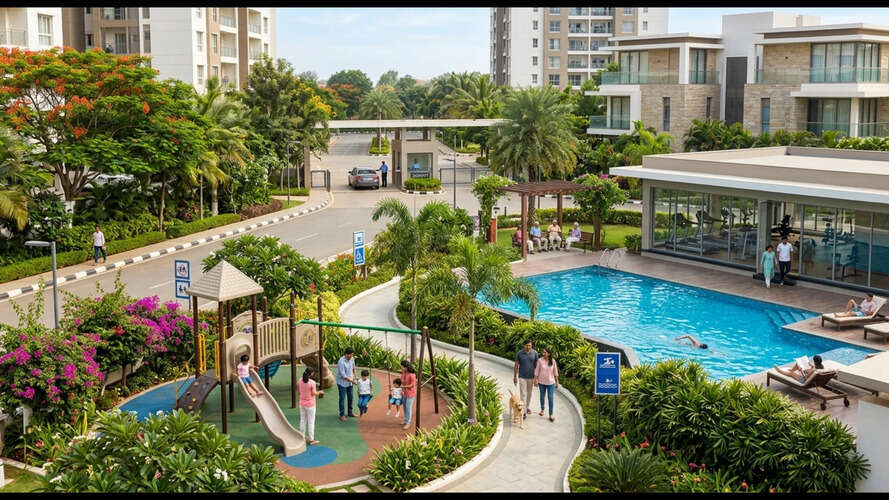
- Dedicated outdoor spaces: Pet parks, walking trails, and green corridors where pets can move freely
- Support infrastructure: Grooming stations, waste disposal systems, and sometimes even on-site daycare
- Clear community guidelines: Rules that protect both pet owners and non-pet owners, reducing conflict before it starts
- A welcoming culture: Communities where pets are seen as part of the neighborhood, not a problem to be managed
Why Pet Friendly Housing is Growing in India?
Pet-friendly housing is not just a passing trend; it is here to stay. Here are the reasons why pet-friendly housing is growing in India:Pets are Now Part of the Family
Urban India's relationship with pets has fundamentally changed, driven by younger buyers who grew up treating animals as companions rather than as guards. Millennials and Gen Z homebuyers, who are now the dominant force in India's residential market, overwhelmingly view their pets as family members. Their housing decisions reflect that.The Post-Pandemic Shift
The pandemic significantly accelerated pet adoption across India's cities. People working from home sought companionship, and many found it in a dog or a cat. That bond didn't disappear when offices reopened, and neither did the expectation that a home should accommodate it properly.As joint families give way to nuclear households and single-occupant living in metros, pets have taken on a more central emotional role. In many urban homes, a pet is not an addition to the family; it is the family. This makes housing that restricts or complicates pet ownership feel not just inconvenient but genuinely limiting.Developers across India's major metros have started recognizing this as both a lifestyle need and a business opportunity. In cities where often look identical on paper, pet-friendly amenities create real differentiation. A dog park or a grooming station isn't just an amenity, it's a signal to a buyer that this community was designed with their life in mind.The best pet friendly communities go well beyond a patch of grass. Here's what to look for when evaluating a project:Enclosed, dedicated spaces where dogs can run off-leash and play without spilling into areas shared with residents who may be less comfortable around animals. A proper pet park has fencing, shade, and enough space to serve the community without feeling crowded.Internal pathways that allow pet owners to walk their dogs within the community, away from traffic, without navigating complaints from neighbors. Well-designed walking trails double as green corridors that improve the overall quality of the community environment.On-site grooming facilities are increasingly common in premium projects. For a busy professional who can barely find time for their own appointments, having a grooming station within the community removes a genuine logistical stress from pet ownership.This is the single biggest source of tension in pet-friendly housing communities. Thoughtfully placed waste bins, composting options, and clear guidelines for their use go a long way in maintaining community hygiene and reducing friction between residents.Inside the home, the details matter: balcony railings with no gaps that a small pet could squeeze through, flooring that doesn't show every scratch, and paint that's safe for animals who spend their lives close to the floor. Some developers are now offering optional pet-ready configurations at the time of booking.Adoption drives, pet playdates, and awareness workshops create a social fabric that goes beyond amenities. They signal that the community genuinely values pet-inclusive living and give pet owners a space to connect with neighbors who share their priorities.Several builders in Tier-1 and Tier-2 cities are actively developing pet-inclusive communities. Some of the Indian cities where pet friendly society is growing include:Bengaluru has a strong base of young professionals, technology workers and pet-owning households, making pet-friendly housing an increasingly visible residential trend. Premium developments in areas such as Whitefield and Sarjapur Road increasingly highlight open spaces, walking areas and other pet-friendly features. However, availability varies by project, so buyers should verify the society's written pet policy and amenities before committing.Space constraints make pet-friendly design a challenge, but developers in Mumbai's premium segment, particularly in the Western suburbs and emerging corridors like Thane and Navi Mumbai are responding with dedicated pet zones and green-integrated layouts. Resale demand for pet friendly units here is notably strong.Gurgaon's large pool of senior professionals, expats, and NRIs, many of whom have lived in pet-friendly cities abroad, drives consistent demand. Boutique and low-density projects in sectors along Golf Course Road and Dwarka Expressway have been among the first to integrate dedicated pet infrastructure.Hyderabad's rapidly expanding premium residential market has seen growing interest in pet friendly communities. Projects in corridors like Gachibowli, Kokapet, and Tellapur are increasingly responding to buyer demand with dedicated pet spaces in their master plans.Both cities have seen a steady rise in pet ownership, particularly among young professionals and nuclear families. Pet-friendly rental housing is in especially high demand in Pune's tech corridors, while Chennai's newer gated communities are beginning to incorporate dedicated animal-friendly zones.Delhi-NCR also has city-specific pet regulations. Noida Authority has a pet policy covering matters such as pet registration and vaccination, while Greater Noida has its own pet-policy framework administered by the Greater Noida Industrial Development Authority (GNIDA). Pet owners should verify the latest requirements with the relevant authority before moving into a housing society.This is where a lot of pet owners don't know their rights, and a lot of RWAs overstep theirs.The Animal Welfare Board of India (AWBI) issued guidelines in 2015 for pet dogs, street dogs, caregivers and Resident Welfare Associations (RWAs)/Apartment Owners Associations (AOAs). The guidelines state that RWAs and AOAs cannot introduce a blanket ban on keeping pet dogs, including through majority decisions or amended bye-laws, where the pet owner is complying with applicable laws.RWAs/AOAs can, however, establish reasonable rules for maintaining hygiene, safety and peaceful coexistence, provided those rules do not conflict with applicable law or the AWBI guidelines. These may include:These are reasonable community management measures, and responsible pet owners generally support them.Some cities have additional municipal requirements. Pet owners in cities like Delhi, Pune, and Chennai may be required to register their pets with local authorities and provide proof of anti-rabies and other standard vaccinations. Checking the local municipal requirements before moving into a new community is worth doing.Whether you're buying or renting, here's what to verify before committing:Pet-friendly housing in India is shifting from a niche preference to a mainstream expectation. The buyers driving this change, younger, urban, emotionally invested in their pets, are also the buyers who will define residential demand in the next decade. Developers who have recognized this are building communities where pets are genuinely welcome, not merely tolerated.If you're a pet owner searching for a home, the landscape has improved. But the best communities still require careful research because “pet-friendly” on a banner outside a project and pet friendly in daily life can still be very different things.Look beyond the amenity list. Visit in person. Talk to residents. And always verify the community's pet policy in writing before you commit. is the premium real estate platform by The Times of India Group, curating verified, RERA-registered luxury and premium projects across India's most active property markets, including pet friendly communities in Bangalore, Gurgaon, Hyderabad, Mumbai, and Pune.Frequently asked QuestionsFAQs
Pet friendly housing refers to residential properties that officially welcome pets. These communities feature inclusive policies and dedicated amenities.
Disclaimer: The information presented by TOI Homes, part of The Times of India Group, is for general informational purposes only and does not constitute financial, legal, or investment advice. All data and insights are based on sources believed to be reliable but are not guaranteed for accuracy or completeness and are subject to change due to market conditions. The developer and associated entities are not liable for decisions made based on this information. Real estate investments involve risks, and buyers are advised to conduct independent due diligence and consult certified advisors before investing. TOI Homes does not endorse or promote any specific property or developer unless explicitly stated.