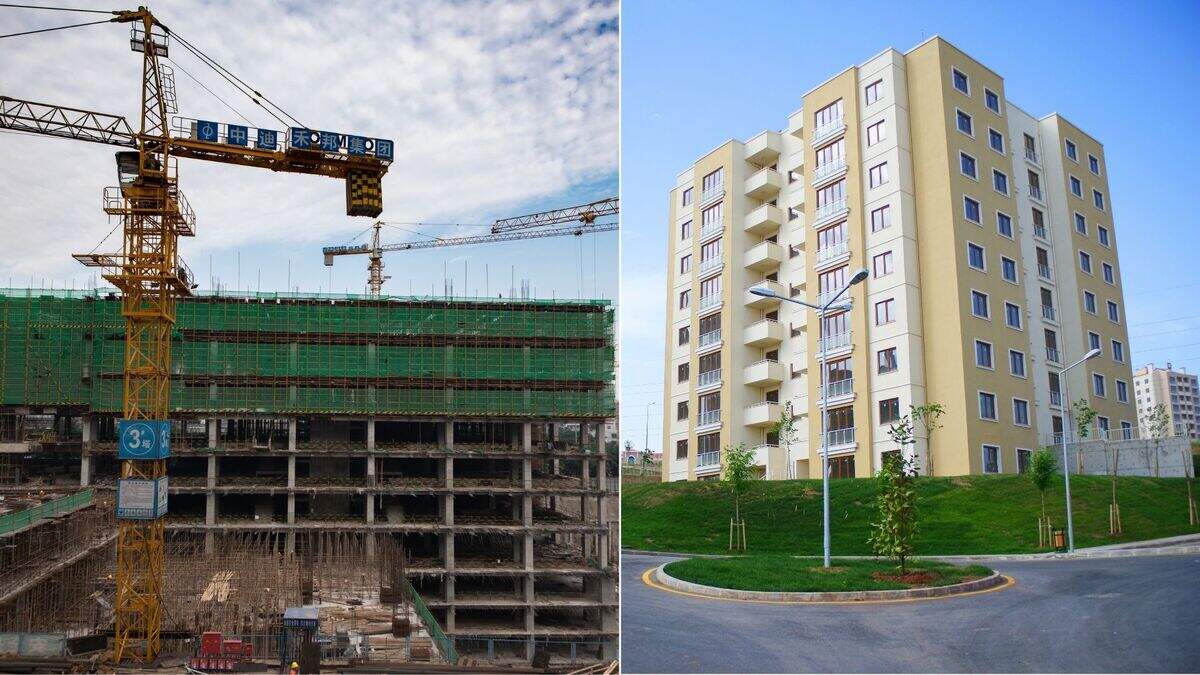
For NRIs planning to
buy luxury property in India, deciding whether to buy an
under-construction or ready-to-move property is a common question. The right option depends on when you need the property, whether you are looking for investment, or how much construction risk you can take and how easily you can manage the purchase from abroad.
Under construction properties may offer phased payment plans and access to newer projects. While
ready-to-move luxury homes offer greater visibility over the actual property and earlier possession.
For NRIs, the decision also involves practical considerations such as remote site visits, documentation, developer track record, possession timelines and property management.
Under-Construction vs Ready-to-Move Property: At a Glance
Factor
| Under-Construction Property
| Ready-to-Move Property
|
|---|
Possession
| At a future date
| Usually available immediately, subject to applicable approvals
|
Property inspection
| Based largely on plans, specifications and construction progress
| Actual unit can be inspected
|
Payment
| Often linked to construction milestones
| Generally more front-loaded
|
Construction risk
| Higher
| Lower because construction is substantially complete
|
Potential Rental income
| Generally possible after possession and when the property is legally/contractually available for occupation
| Can potentially begin soon after purchase and handover
|
Customisation
| May offer some scope depending on project stage and developer
| Usually limited
|
Initial price
| May be lower than comparable completed inventory, depending on project
| May carry a premium for completed inventory
|
GST
| Generally applicable to qualifying construction transactions before the relevant completion/first-occupation point, subject to the applicable GST rules
| Generally not applicable where the entire consideration is received after the required completion certificate or first occupation, whichever is earlier |
The comparison is ultimately about cost, certainty, timing and risk, rather than simply choosing the cheaper option.
An
is a residential unit in a project that is still being developed and has not reached the stage at which the buyer receives possession of the completed property.
These properties are typically purchased before completion and may involve payments linked to construction milestones. The buyer therefore commits capital before the final property is available for inspection.
For NRIs, this can provide access to newer projects and a longer payment horizon, but it also means depending on the developer's construction progress, approvals, and completion schedule.
NRIs can generally buy residential and commercial immovable property in India under the applicable FEMA framework. It is subject to the prescribed conditions. Agricultural land, plantation property, and farmhouses are not covered by the general permission for purchase. Payment for such purchases must be made through permitted banking channels and accounts in accordance with the applicable FEMA rules.
For an eligible NRI, choosing between an under-construction and ready-to-move residential or commercial property does not, by itself, change the general FEMA permission to acquire such property. The practical difference lies more in the stage of development, payment structure and monitoring involved.
For an NRI buying from overseas, an under-construction property may require:
RERA registration, wherever applicable provides an important regulatory framework. However, it does not eliminate project-specific delivery risk. Premium NRI homebuyers should review the project’s registered details and developer track record.
Several under-construction projects use construction linked payment plans. This spread payments over the development period. Rather than asking the buyer to fund the entire price immediately.
Under-construction developments may offer newer layouts, amenities, building specifications and community infrastructure compared with older completed inventory.
If the surrounding location develops and property values increase between purchase and possession, an under-construction buyer may benefit from capital appreciation. However, appreciation is a potential outcome, not a guaranteed return.
For an NRI planning to return to India several years from now, a future possession date may match their relocation timeline.
Buying during the development phase can give buyers access to inventory in newly launched projects and emerging micro-markets.
The biggest consideration is that the buyer is purchasing a property that does not yet exist in its final form. Delays can arise from approvals, financing, construction or other project-specific factors.
An NRI may not be able to regularly visit the construction site. This increases dependence on project updates, documents, representatives and professional due diligence.
Unlike a completed property, an under-construction home generally does not generate residential rental income before possession and handover.
Depending on the loan structure and disbursement schedule, an NRI may have financing costs associated with the property while continuing to pay for accommodation overseas.
The surrounding development, amenities, views, common areas and neighbourhood ecosystem may still be evolving. Buyers therefore need to evaluate the project's plans and development context carefully.
A ready-to-move property is a completed residential property that is available for possession, subject to the applicable completion and occupancy approvals.
"Ready-to-move" is commonly used to describe a completed or near-completed property, but buyers should verify the applicable completion or occupancy certificate and possession status rather than relying on the marketing label alone.
The biggest difference is visibility. Instead of relying primarily on plans and construction schedules, buyers can inspect the actual unit and assess its condition, surroundings, amenities and accessibility.
For an NRI, this can make remote decision-making more straightforward because much of the uncertainty around construction has already been resolved.
A ready-to-move property can be particularly relevant to NRIs who:
An NRI can also appoint a trusted representative to inspect the property, verify documents and assist with local processes where legally appropriate.
The buyer can inspect the actual apartment rather than relying entirely on floor plans, sample apartments and construction updates.
Since the property is already completed, the buyer is not waiting for the developer to finish construction.
Once the property has been handed over and is ready for occupation, an owner may be able to rent it out, subject to the property's documentation, society rules and local requirements.
NRIs can assess the actual surroundings, connectivity, occupied units, maintenance standards and functioning amenities.
The unit's layout, finishes, views, natural light, ventilation and common areas can be physically evaluated before making the purchase decision.
Completed properties can command a premium over comparable under-construction inventory because the buyer is paying for possession certainty. The premium varies significantly by location, project and market conditions, so it should not be treated as a universal percentage.
The buyer may have to arrange a larger portion of the purchase price over a shorter period compared with a construction-linked payment plan.
By the time a property is ready, most structural and design decisions have already been made.
If the property has been completed some time ago, the buyer should assess the age of the building, maintenance standards, amenities and upcoming repair or renovation requirements.
In established markets, some of the area's infrastructure and development potential may already be reflected in property prices. Buyers should therefore assess the property's current valuation rather than assuming future appreciation.
For a resident buyer, visiting a construction site or meeting a developer may be relatively easy. For an NRI, the same process can involve international travel, time-zone differences, family members, representatives and remote document verification.
That makes the management dimension of the purchase especially important.
Ask when you actually need the property.
The same property may not suit every NRI objective.
An under-construction property may appear cheaper at the time of purchase. But the financial comparison should also consider:
CBIC's current
provides for an effective 5% rate on qualifying residential apartments other than affordable residential apartments and 1% for qualifying affordable residential apartments under the applicable real-estate scheme, subject to the prescribed conditions. Where the entire consideration is received after the required completion certificate or first occupation, whichever is earlier, the construction service is outside the scope of GST under the relevant provision.
So, do not compare only the base property prices.
Before purchasing either type of property, an NRI should verify:
The exact checks will vary by property, state and transaction structure.
A lower initial price can be attractive, but the buyer should evaluate what they are receiving in exchange for waiting.
Likewise, a ready-to-move property should not automatically be treated as the safer financial choice simply because it is completed. Its location, price, building condition, rental demand and documentation still require due diligence.
The decision is ultimately about matching property status with the NRI's objective and ability to manage the investment remotely.
Under-Construction vs Ready-to-Move: What Should NRIs Choose?
There is no single answer that applies to every NRI.
An under-construction property may suit buyers who have a longer investment horizon, are comfortable waiting for possession and want to consider newer projects and phased payment structures.
A ready-to-move property may suit buyers who prioritise visibility, earlier possession, physical inspection and the possibility of using or renting the property sooner.
Before making the decision, NRIs should compare the total cost, possession timeline, developer track record, location, rental prospects, documentation, financing structure and their own investment horizon.
The most useful question is therefore not
but:
“Which property status better matches my purpose, timeline and ability to manage the purchase from overseas?”
Buying property in India from overseas involves more than finding the right project. NRIs may also need support with property selection, remote site visits, documentation, financing, FEMA-related requirements and keeping track of the property through the purchase process.
offers an NRI-focused property advisory experience covering the journey from initial consultation to possession.
TOI Homes' NRI services include:
also works with RERA-registered projects and screens developers based on factors including delivery track record, financial strength and market credibility.
For an NRI, this kind of support can be particularly relevant when the property is under construction, because the purchase involves ongoing monitoring between booking and possession.